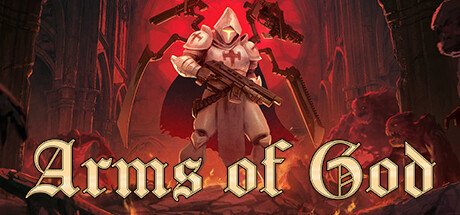
Arms of God is an action RPG featuring hack-and-slash combat centered around divine weapons with unique abilities and transformations. Players battle through mythological environments fighting celestial and demonic enemies with up to 4-player co-op. The divine weapon system is the standout mechanic. Each weapon transforms your character's moveset entirely and can be upgraded through a branching skill tree. Boss encounters are multi-phase spectacles requiring team coordination in co-op. The game draws clear inspiration from games like Devil May Cry and God of War while carving its own identity through the divine weapon theme.
Starting Arms of God can feel overwhelming. This guide tells you exactly what to focus on during your first hours so you don't waste time on things that don't matter yet. For the full progression path, see our walkthrough.
What Kind of Game Is This?
Arms of God is a action game built around hack-and-slash combat and divine weapon system. The core loop involves mastering these systems to progress through increasingly challenging content.
What to expect: Time investment in learning mechanics, experimentation, and gradual mastery. The game rewards patience and knowledge.
Choosing Your First Role
| Role | Beginner Rating | Why |
|---|---|---|
| Warrior | Good (but demanding) | Chain light and heavy attacks into combo finishers, build Divine Charge through aggressive play, activate Divine Form for boss burst phases. |
| Mage | Excellent for beginners | Mix melee staff combos with ranged spell casts, use spell circles for zone control, activate Divine Form for massive sustained AoE. |
| Rogue | Excellent for beginners | Dodge behind enemies for backstab positioning, chain rapid combos, use Divine Form for guaranteed backstab burst windows. |
| Paladin | Excellent for beginners | Block enemy attacks with perfect shield timing, draw aggro from allies, activate Divine Form to heal the team during dangerous boss phases. |
| Ranger | Situational | Maintain distance, charge shots for maximum damage, use Divine Form for AoE during mob encounters. |
Our recommendation: Start with Mage. The Holy Staff mage combines melee staff strikes with ranged spell attacks. Divine Form summons persistent spell circles that deal AoE damage over time. Less direct damage than Warrior but superior crowd control and area denial.
Avoid Ranger as your first pick. The Celestial Bow ranger provides consistent ranged damage and is the safest playstyle. Once you're ready, check our classes guide for all options.
First Session Step-by-Step
Step 1: Learn hack-and-slash combat
Fast-paced melee combat with light attacks, heavy attacks, launchers, and dodge rolls. Combos are weapon-specific with unique strings per weapon type. Perfect dodge triggers a slow-motion counter window. Air juggling is possible with all weapon types. The combat rewards aggressive play with a combo rating system (D through SSS) that increases damage and XP rewards.
This is the foundation. Spend your first 15-30 minutes getting comfortable with how hack-and-slash combat works before worrying about anything else. Our combat guide breaks this down further.
Step 2: Head to Temple Ruins
The starting zone with tutorial enemies and the first boss fight. Teaches all core combat mechanics including dodge timing, combo chains, and Divine Form activation. Contains the Holy Staff weapon.
Clear the main content here before moving on. Everything teaches fundamentals you'll need later. See our maps guide for all locations.
Step 3: Get Your First Upgrade
Look for Holy Staff: it's the most accessible early upgrade. A hybrid melee-magic weapon where staff strikes generate spell charges consumed by ranged attacks. The spell circle mechanic makes it the best crowd control weapon. Obtained in the Temple Ruins after the first boss.
Step 4: Understand divine weapon system
Each weapon is imbued with divine power that charges through combat. At full charge, activating Divine Form transforms your weapon and moveset for a limited time. The Divine Sword becomes a massive greatsword, the Holy Staff summons spell circles. Each divine weapon has a branching upgrade tree with two specialization paths.
This is the system most new players overlook. Invest time here early. It pays off throughout the entire game.
Step 5: Push to Dark Forest
A mid-game zone with ambush-heavy encounters where enemies drop from trees and emerge from shadows. The Rogue-themed area rewards stealth play. The Shadow Daggers are obtained by defeating the Ninja boss.
Essential Mechanics Explained
hack-and-slash combat
Fast-paced melee combat with light attacks, heavy attacks, launchers, and dodge rolls. Combos are weapon-specific with unique strings per weapon type. Perfect dodge triggers a slow-motion counter window. Air juggling is possible with all weapon types. The combat rewards aggressive play with a combo rating system (D through SSS) that increases damage and XP rewards.
divine weapon system
Each weapon is imbued with divine power that charges through combat. At full charge, activating Divine Form transforms your weapon and moveset for a limited time. The Divine Sword becomes a massive greatsword, the Holy Staff summons spell circles. Each divine weapon has a branching upgrade tree with two specialization paths.
boss encounters
Bosses follow a multi-phase design with distinct movesets per phase. Health thresholds trigger phase transitions with new attacks and mechanics. Some bosses require environmental interaction. Pulling levers, destroying supports, or using specific divine weapon abilities to strip defenses. Co-op bosses gain additional attacks targeting multiple players simultaneously.
skill upgrades
Skills are unlocked by spending Divine Points earned from enemies and exploration. Each weapon has a unique skill tree branching into two paths (e.g., Divine Sword splits into Holy Path for AoE damage and Judgment Path for single-target burst). Respec is free, encouraging experimentation.
co-op gameplay
Up to 4 players cooperate through the full campaign. Enemy HP and damage scale with player count. Co-op-specific attacks trigger when two players use Divine Form simultaneously, creating devastating combo finishers. Reviving downed teammates requires channeling for 3 seconds while vulnerable.
Common Beginner Mistakes
1. Button-mashing instead of learning weapon-specific combo strings
Each weapon has optimal combos. Random attacks deal roughly half the damage of proper combo chains.
2. Using Divine Form as soon as it charges instead of saving it for boss vulnerability windows or dangerous phases
3. Ignoring the combo rating system
Low combo ratings (D-C) dramatically reduce XP and item drops. Learn to dodge without breaking your combo chain.
4. In co-op, all four players using Divine Form at different times instead of coordinating for the Combo Finisher bonus damage
5. Neglecting to upgrade weapons at the Volcanic Forge
A +5 weapon at level 30 outdamages a +0 weapon at level 50.
First 5 Hours Checklist
- Understand hack-and-slash combat and divine weapon system
- Choose Mage as starting role
- Clear Temple Ruins main content
- Acquire Holy Staff or equivalent upgrade
- Reach Dark Forest
- Perfect dodge (dodge at the last moment before impact) triggers a 2-second slow-motion window. Use this to land full combo strings on bosses safely.
- Build Divine Charge aggressively. Each hit fills the gauge. Higher combo ratings fill it faster. A SSS-rated combo fills the gauge in about 15 seconds.
Tips for New Players
- Perfect dodge (dodge at the last moment before impact) triggers a 2-second slow-motion window. Use this to land full combo strings on bosses safely.
- Build Divine Charge aggressively. Each hit fills the gauge. Higher combo ratings fill it faster. A SSS-rated combo fills the gauge in about 15 seconds.
- Save Divine Form for boss phase transitions. The burst damage during transition vulnerability windows is the highest DPS opportunity in every fight.
- In co-op, coordinate Divine Form activations. Two players activating simultaneously triggers a Combo Finisher dealing 5x normal Divine Form damage.
- Each weapon's skill tree has two paths. You can unlock both but only equip abilities from one path at a time. Respec is free, so experiment.
- Backstab positioning as Rogue means dodging through enemies, not around them. The dodge roll passes through enemy hitboxes, ending up behind them.
- The combo rating system (D to SSS) affects XP and item drop rates. Maintaining A-rank or higher doubles your effective farming speed.
- Boss phase transitions are telegraphed by a brief glow and pose. Disengage when you see this. The transition burst attack is usually arena-wide.
- Relics stack their effects. Two Combo Extension relics extend your combo window by 4 seconds total. Prioritize relic synergies over raw stats.
- The Volcanic Forge crafting station upgrades weapons permanently. Each weapon has 5 upgrade tiers requiring boss materials from different zones.
Frequently Asked Questions
How long is Arms of God?
The main campaign takes about 12-15 hours. Completionists pursuing all weapons, max upgrades, and endgame challenges should expect 25-30 hours. Co-op playthroughs tend to be faster due to shared damage output.
Is Arms of God co-op only?
No, it's fully playable solo. Enemy counts and health scale based on player count. Co-op adds Combo Finishers and team synergies but the solo experience is complete and balanced.
What is the best weapon in Arms of God?
The Divine Sword is the most versatile and best for learning the game. For endgame DPS, the Shadow Daggers with backstab builds have the highest damage ceiling but require precise positioning. The Sacred Shield is essential for co-op survivability.
More Arms of God Guides
- Arms of God Arms of God Overview
- Arms of God Best Builds
- Arms of God Tier List
- Arms of God Walkthrough
- Arms of God Tips & Tricks
- Arms of God Weapons Guide
- Arms of God Combat Guide
- Arms of God Boss Guide
- Arms of God Maps & Locations
- Arms of God Crafting Guide
- Arms of God Classes & Characters
Similar Games
If you enjoy Arms of God, check out these related guides:
- Helldivers 2 Beginner's Guide: action game with similar mechanics
- Black Myth: Wukong Beginner's Guide: action game with similar mechanics
- Monster Hunter Wilds Beginner's Guide: action game with similar mechanics